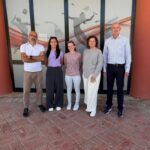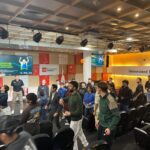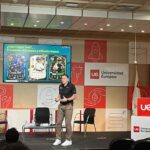
Malta recently welcomed two of the most senior figures in international sports coaching governance, as Lorraine Lafrenière, President of the International Council for Coaching Excellence (ICCE), and Dr Ladislav Petrovic, the organisation’s General Secretary, held a series of strategic meetings with key sporting institutions across the country.
Throughout the visit, the ICCE delegation was accompanied by Renzo Kerr-Cumbo, President of the Malta Sport Coaches Association (MSCA) and one of the directors of Sport Coaching Europe (SCE), the European arm of the ICCE, which this year marks its fifth anniversary since being established in Malta.
At first glance, such a visit may appear ceremonial. In reality, however, the discussions held over the past days point towards something far more substantial: Malta’s increasingly recognised role within the wider European and international conversation surrounding coaching, coach education and sporting governance.
The visit was organised primarily to strengthen relationships between ICCE, Sport Coaching Europe and Maltese sporting organisations, while exploring opportunities for collaboration in areas such as coaching regulation, education, safeguarding and integrity in sport.
One of the key meetings was held with the Malta Olympic Committee, where the delegation met President Julian Pace Bonello and Secretary General Joe Cassar. Discussions focused heavily on the importance of regulating sports coaching while simultaneously recognising the crucial contribution volunteers continue to make to Maltese sport.
This remains one of the most delicate balances facing sporting systems internationally. While coaching increasingly requires educational standards, safeguarding obligations and professional accountability, grassroots sport in countries such as Malta still depends significantly on volunteers who dedicate their time and energy to clubs and athletes. The meeting acknowledged that regulation must support and strengthen sport without undermining the volunteer culture upon which so much local sport still relies.
Another important meeting took place with the Authority for Integrity in Maltese Sport (AIMS), where the delegation met CEO Kevin Azzopardi, Director of Integrity Dr Sandro Camilleri, and Director of Education Andy Grech.
The discussions with AIMS focused strongly on regulation, integrity, safeguarding and education — all areas that are rapidly becoming central to modern sport. In recent years, international sporting bodies have increasingly recognised that sporting success alone cannot define healthy sporting systems. Athlete welfare, ethical behaviour, safe sporting environments and integrity structures now form part of the core responsibilities of sporting organisations.
Within this context, Sport Coaching Europe offered its support particularly in the field of education, especially in areas closely linked to AIMS’ mission, such as integrity and safeguarding. The discussions reflected a growing understanding that coaches today are not merely technical instructors, but educators and role models who significantly influence athlete wellbeing
and sporting culture.
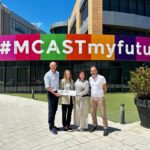
Another significant stop during the visit was Malta College of Arts, Science and Technology (MCAST), where discussions built upon the strong collaboration already established between MCAST and Sport Coaching Europe over recent years. The delegation met Deputy Principal Ms Ann Marie Cassar.
As the host institution of Sport Coaching Europe’s headquarters in Malta, MCAST reaffirmed its commitment towards strengthening existing collaborations between the two organisations. Discussions also focused on expanding future collaborative projects, particularly an important pending European funding application centred on coaching education within higher education.
This aspect may prove particularly important for Malta’s long-term sporting development. Across Europe, coaching education is increasingly being integrated within higher education institutions, where coaching can be supported by research, pedagogy and professional learning structures.
Both ICCE and Sport Coaching Europe reiterated their willingness to support higher education programmes focused on sports coaching, recognising that sustainable athlete development is only possible through sustainable coach development.
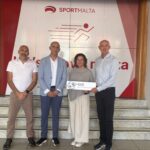
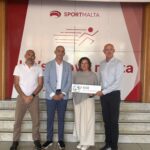
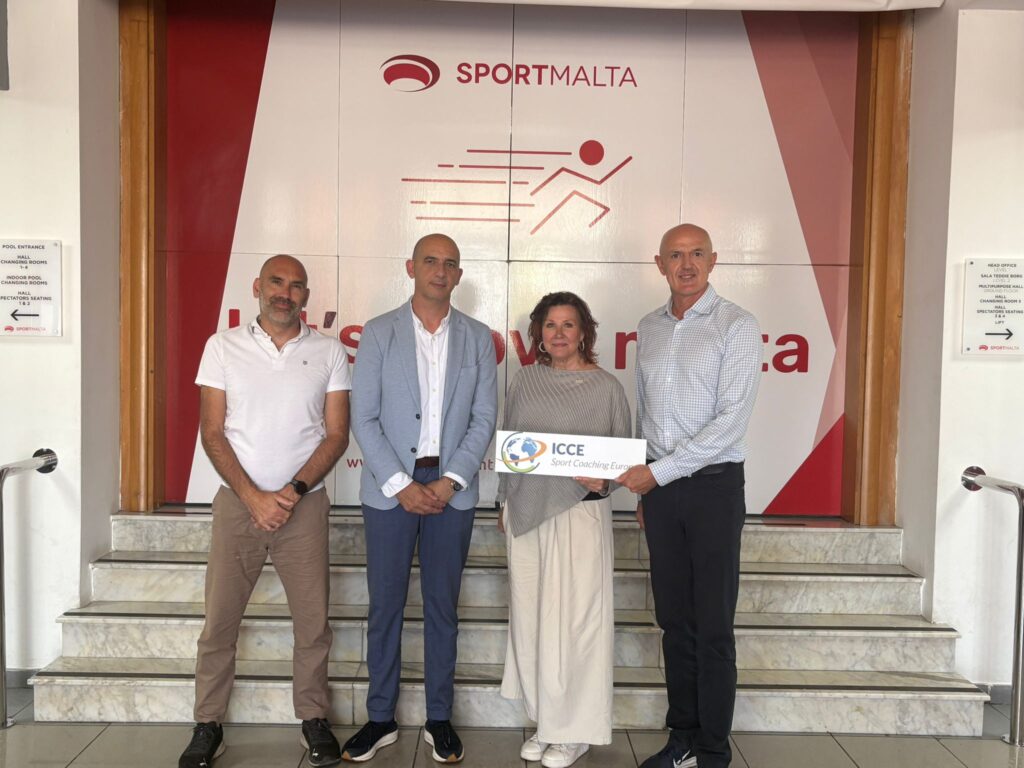
The final meetings were held with SportMalta, including discussions with CEO Mark Cutajar, as well as with the Malta Sport Coaches Association itself.
SportMalta reportedly showed strong interest in strengthening collaboration with the MSCA and in exploring opportunities available through both Sport Coaching Europe and the ICCE. The discussions centred on how Maltese coaching structures can continue evolving through cooperation between local and international stakeholders.
Taken together, these meetings represented far more than institutional protocol. They reflected a wider recognition that coaching has become one of the most important pillars within modern sport.
For decades, coaching was often viewed narrowly through the lens of performance and tactics. Today, however, coaches are increasingly recognised as educators, mentors, leaders and guardians of athlete welfare. Coaching now intersects with safeguarding, ethics, mental health, inclusion and long-term human development.
Malta’s growing involvement within international coaching structures therefore carries significance that extends beyond sport itself. The fact that Sport Coaching Europe was established in Malta five years ago is increasingly proving to be more than symbolic. It positions Malta within a growing European movement seeking to strengthen coaching systems, improve educational standards and elevate the status of coaching as both a profession and a social responsibility.
Naturally, challenges remain. Malta still faces important conversations regarding coaching recognition, regulation, education and sustainability. Yet the visit by ICCE leadership demonstrated clearly that Malta is now participating in these conversations at an international level rather than observing them from the sidelines.
The challenge now is to ensure that the momentum generated by these meetings translates into long-term action, stronger educational opportunities and meaningful support for coaches across all sporting disciplines.
Because ultimately, behind every athlete, every team and every sporting success, there is always a coach.